
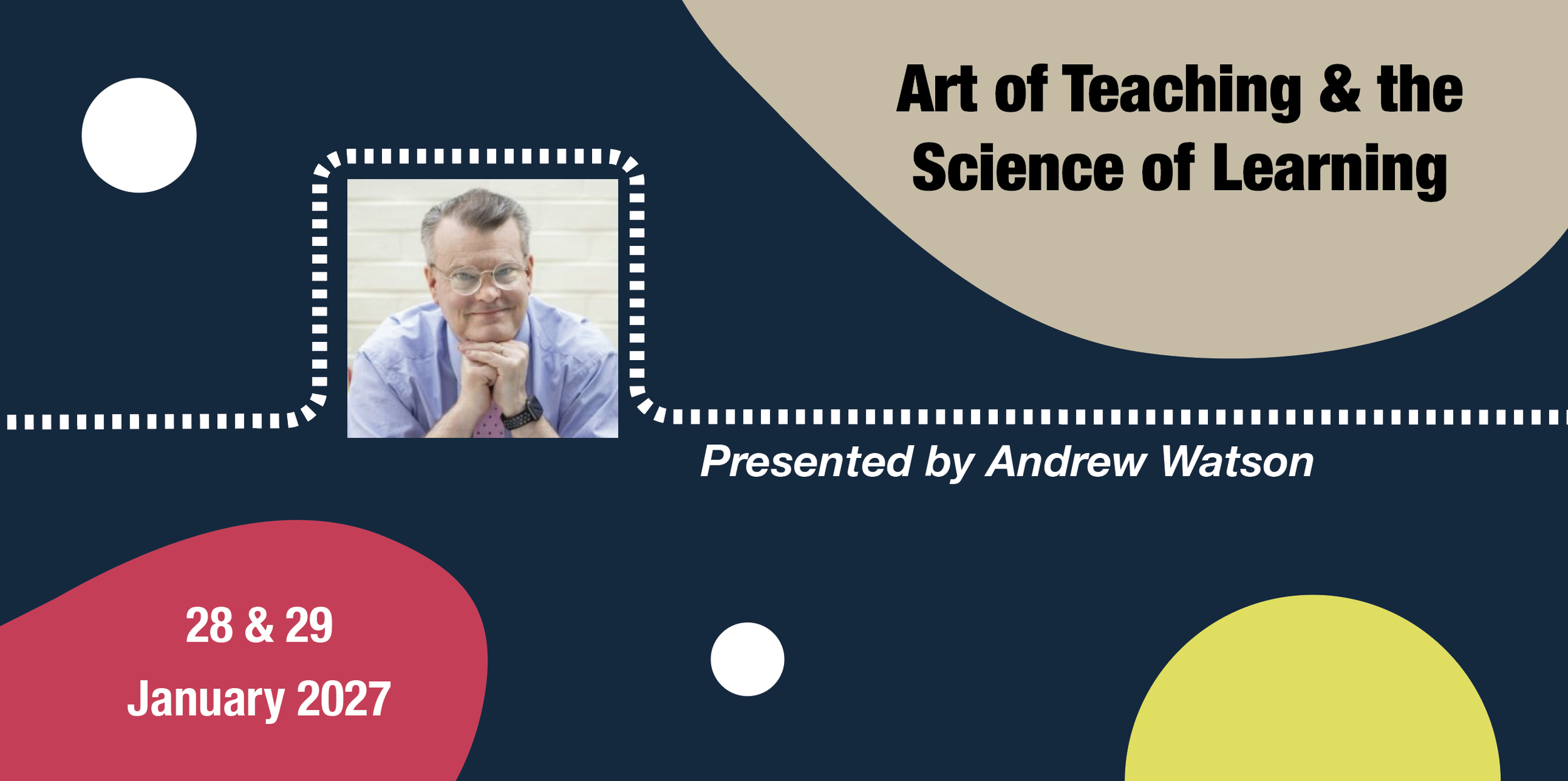
Why do students forget what we just taught them? Why does their attention wander from a well-planned lesson? This two-day workshop translates findings from cognitive science into practical classroom strategies: strategies designed to make learning easier and teaching more effective.
We’ll explore how working memory acts as a bottleneck on new learning. We’ll look at how long-term memory builds over time. We’ll examine how students’ prior knowledge shapes their future learning. And we’ll take an honest look at attention — what captures it, what depletes it, and why even motivated students lose it.
This workshop isn’t a survey of learning styles or feel-good tips. It’s a serious, lively, and practical look at how minds work — and what that science means for the decisions teachers make every day. Participants leave with frameworks to use immediately, and a powerful, scientific understanding of teaching and learning.
Registration
€875.00 (Early Bird until 01/12/2026)
€975.00 (Standard Rate until 22/01/2027)
By booking a registration, you accept the CDLT Terms and Conditions. EventBrite might charge an Administration Fee for their services.
Featured Speaker

Andrew Watson
Andrew Watson has spent more than two decades helping educators understand and apply the science of learning. A former high school English teacher with an M.Ed. and an M.A., he now works as an independent consultant, translating cognitive science research into practical classroom strategies.
Andrew is the author of three books on memory, attention, and motivation, and writes the Learning and the Brain Blog. He has presented and keynoted at dozens of national and international conferences — including Learning and the Brain and researchED — bringing the same blend of humor and practicality to audiences across the United States, Europe, and beyond.
His work focuses on the practical classroom benefits that cognitive science offers teachers and school leaders: not trends or feel-good frameworks, but research-grounded tools to make learning easier and teaching more effective.